
The first time you hear a water heater groan at 6 a.m. usually isn’t the moment you’re eager to learn how it works. You just want hot water. I’ve spent years crawling into crawlspaces around Holly Springs, tracing lukewarm showers back to sediment, burned elements, and filters clogged with the town’s fine mineral grit. The pattern repeats: the neighbors who treat water heater service as routine rarely call in a panic. The ones who wait for a breakdown end up with a rush decision on water heater replacement and a few chilly days they didn’t budget for.
Holly Springs has its own quirks. Municipal water here is relatively well balanced, but many homes sit on well water at the edges of town, and those wells bring iron and calcium. Newer subdivisions often run tank-style heaters in tight utility closets with limited combustion air. Some remodels squeeze tankless equipment behind a laundry stack where exhaust runs are long and filters go unnoticed. Those details shape how often your unit needs attention and what kind of tune-up actually pays off.
What a “tune-up” means when done right
A proper water heater service isn’t a wipe-down and a sticker. For tanks, it means addressing heat transfer, corrosion, safety controls, and combustion or electrical performance. For tankless, the focus shifts to flow sensors, scale control, and burners or elements that cycle constantly. The best service checks both the symptoms you notice and the conditions that create them.
For a standard tank water heater, a thorough maintenance visit typically includes draining several gallons to measure sediment, then a controlled flush until water runs clear. We test the temperature and pressure relief valve and the expansion tank if you have a closed-loop system. On gas models, we clean the burner assembly, inspect the flame pattern, and verify that the flue draws properly. On electric models, we ohm out the elements, check for insulation breakdown, and verify the thermostats cycle correctly. The anode rod tells a story: if it’s eaten down to a wire, corrosion is already working on the tank shell. Swapping that $40 to $100 rod can buy you years.
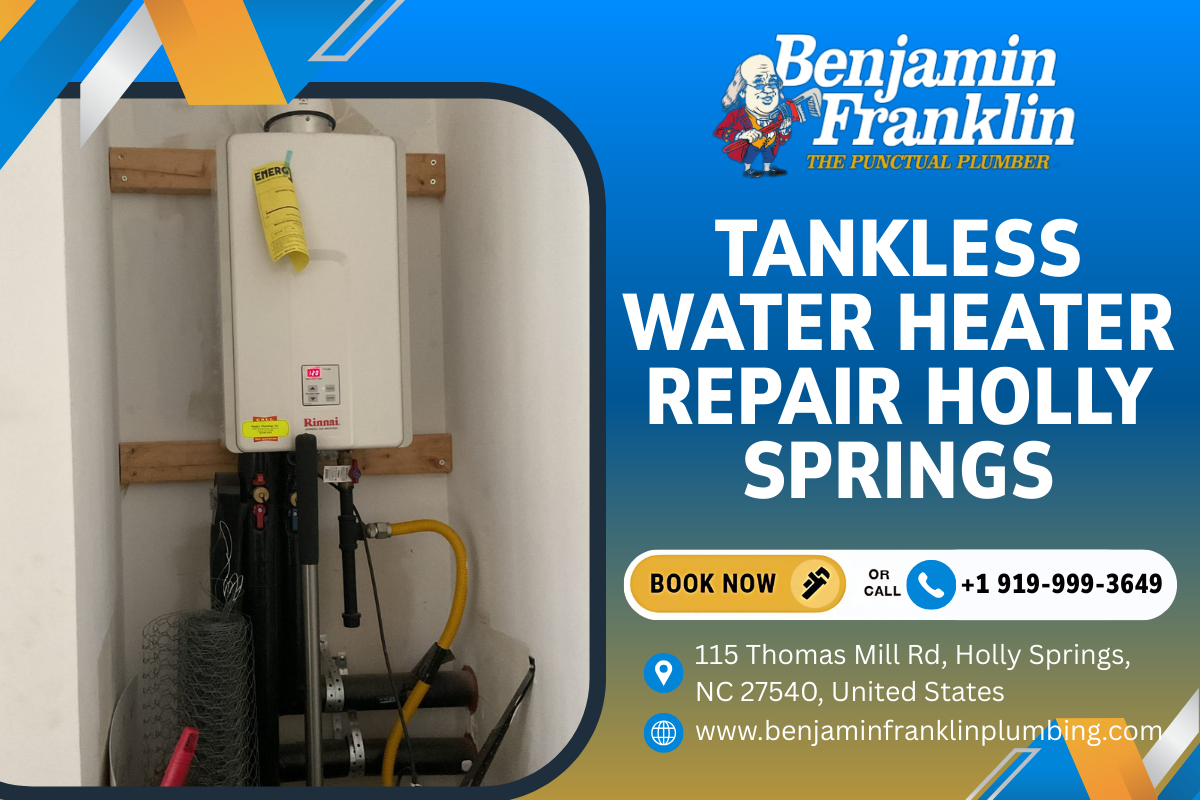
Tankless water heater repair and maintenance looks different. Scale is enemy number one in Holly Springs, so a descaling flush with the right solution at the right concentration matters. We clean the inlet screen filter, check the condensate trap on high-efficiency gas units, and calibrate the gas valve or element output against flow to make sure setpoint temperatures are real. The venting gets special attention. I’ve seen bird nests in intake pipes and joint sealant cracked just enough to pull exhaust back into a closet. A unit can fire fine during a quick test yet fail under a long shower without that airflow margin.
The Holly Springs context: water quality, housing stock, and usage patterns
Maintenance schedules vary by town because water chemistry and home design vary. Around Holly Springs:
- Water hardness runs moderate to moderately hard, often in the 5 to 9 grains per gallon range if you’re on municipal supply. Well users can see double that. Hardness translates to scale, and scale steals efficiency. A tankless unit losing 1 to 2 percent efficiency per month from untreated hardness isn’t unusual. A tank collects it at the bottom as sediment that insulates the water from the burner. Many homes built since 2000 have closed plumbing systems with pressure-reducing valves. Add a check valve at the meter and you need an expansion tank that’s properly charged. When it isn’t, thermal expansion spikes pressure during a heat cycle, and the relief valve weeps. I’ve had homeowners think they needed water heater replacement when what they really needed was a $25 Schrader gauge and 10 minutes of air. Newer infill homes favor compact utility closets. That saves space, but it leaves less room for a tank-type heater to breathe or for a tankless heat exchanger to shed heat. Vent lengths on tankless units stretch toward manufacturer limits. That makes annual cleaning non-negotiable if you want the equipment to hit its rated life.
Usage matters too. A household that loves long showers, runs the dishwasher daily, and does laundry on hot will cycle a heater harder than a retired couple. For the first group, a six to nine month service cadence makes sense, especially on tankless. For light users, yearly is often plenty.
How tune-ups pay off in numbers you can feel
I like numbers, not platitudes. A few real patterns from jobs around Holly Springs:
- Halving the reheat time on older gas tanks. A 50-gallon tank that took 45 minutes to climb back to setpoint after back-to-back showers dropped to about 25 minutes after a full sediment purge and burner clean. The homeowner didn’t gain capacity; they recovered performance they forgot they had. Knocking 8 to 12 percent off energy use on a scaled tankless. After a chemical flush and gas valve calibration, a unit that used to modulate at 80 percent output for a 2.5 gpm shower ran at 68 to 70 percent for the same setpoint. Spread across a year, that matters. Extending tank life by three to five years with timely anode rod replacement. If the tank still holds pressure and the base hasn’t rotted, a new rod plus a flush can push a 9-year-old unit comfortably toward 12 to 14 years for many households in town.
Those gains don’t require major spending. Most water heater https://www.google.com/search?kgmid=/g/11lmhwn8m8&uact=5#lpqa=d,2 maintenance bills land well south of what one emergency after-hours visit costs. And the quiet value is avoided damage: catching a small flue backdraft before it leaves soot on a closet wall, or finding a weeping relief valve that keeps a crawlspace dry.
Repair, replace, or install new: finding the pivot point
There’s a moment when water heater repair stops making sense and water heater replacement becomes the responsible call. You weigh age, tank condition, repair cost, and future risk. In Holly Springs, tank-type heaters often reach 10 to 12 years before pinhole leaks become likely. If a 10-year-old tank shows rust at the base pan, stained insulation, or persistent dampness around fittings, you’re rolling dice even if the burner lights just fine.
For electric tanks, watch for tripping breakers, recurring element failures, and scorch marks at the thermostat wiring. I’ve replaced plenty of elements on 6-year-old units that then ran another five years. I’ve also seen wiring heat damage that made replacement the safer choice.
Tankless units complicate the math. They cost more up front and are worth more repair effort. A heat exchanger with scale can be revived. A cracked exchanger or repeated ignition failures after coil and sensor replacements might point to water heater replacement in the 12- to 15-year window. Parts availability matters; if a control board goes obsolete, your options narrow.
Water heater installation is also an opportunity. If you’re opening walls or updating a kitchen, fold water heater installation Holly Springs planning into the project. Vent routing, gas line sizing, condensate handling, and even simple service clearances are easier to get right when you plan the space rather than adapt to it later. A well-planned holly springs water heater installation isn’t just about day-one performance; it sets up easy maintenance and lower lifetime cost.
What actually fails, and why it’s rarely random
Most “sudden” failures have been building for months. Sediment muffles burner heat until the base of a tank overheats and the enamel cracks, starting a corrosion path. A relief valve that snaps open after years of sticking is telling you pressure has been mismanaged for a while. On tankless units, flow sensors gummed up with fines from new construction upstream mimic bad electronics. Clean them and the ghost faults stop.
Electrical failures tend to be honest. An element ohms high or goes open, and you feel it as half or no heat. But even there, the root cause might be mineral buildup cooking the element. Replace the part without descaling and you’ll be back in months.
Gas systems telegraph trouble if you listen. A lazy yellow flame on a tank burner or tankless burner points to lint, dust, or incomplete combustion. Tight closets without fresh air grilles choke gas models. I’ve walked into brand-new homes where the inspector passed the mechanicals, but the homeowner later stacked paint cans and holiday bins around a tank. Two seasons later, the pilot started tripping. The cure wasn’t exotic — it was clearance and combustion air restored.
Annual service check: the essentials that matter
There are many ways to build a maintenance checklist, but the most productive items keep coming back. Here’s a lean version that catches the problems that cost people real money.
- Verify water pressure and expansion control: measure static pressure; check expansion tank precharge and physical condition. Inspect for combustion air and venting integrity: confirm clearances, check vent joints, verify draft on tanks and negative pressure on tankless intakes. Flush and descale appropriately: drain sediment from tanks; perform a full descaling cycle on tankless with the right concentration and flush time. Check safety and controls: test T&P valve function, inspect gas valve and igniters, validate electrical connections and thermostat or control board behavior. Evaluate anode rod and seals: pull and assess the rod on tanks, inspect dielectric unions, and replace compromised gaskets or nipples.
Most of this can be finished in 60 to 90 minutes if the unit is accessible. The payoff is cumulative and predictable. Skip two years and the third-year service becomes a mini restoration project.
Tankless specifics: why Holly Springs homeowners should care about water treatment
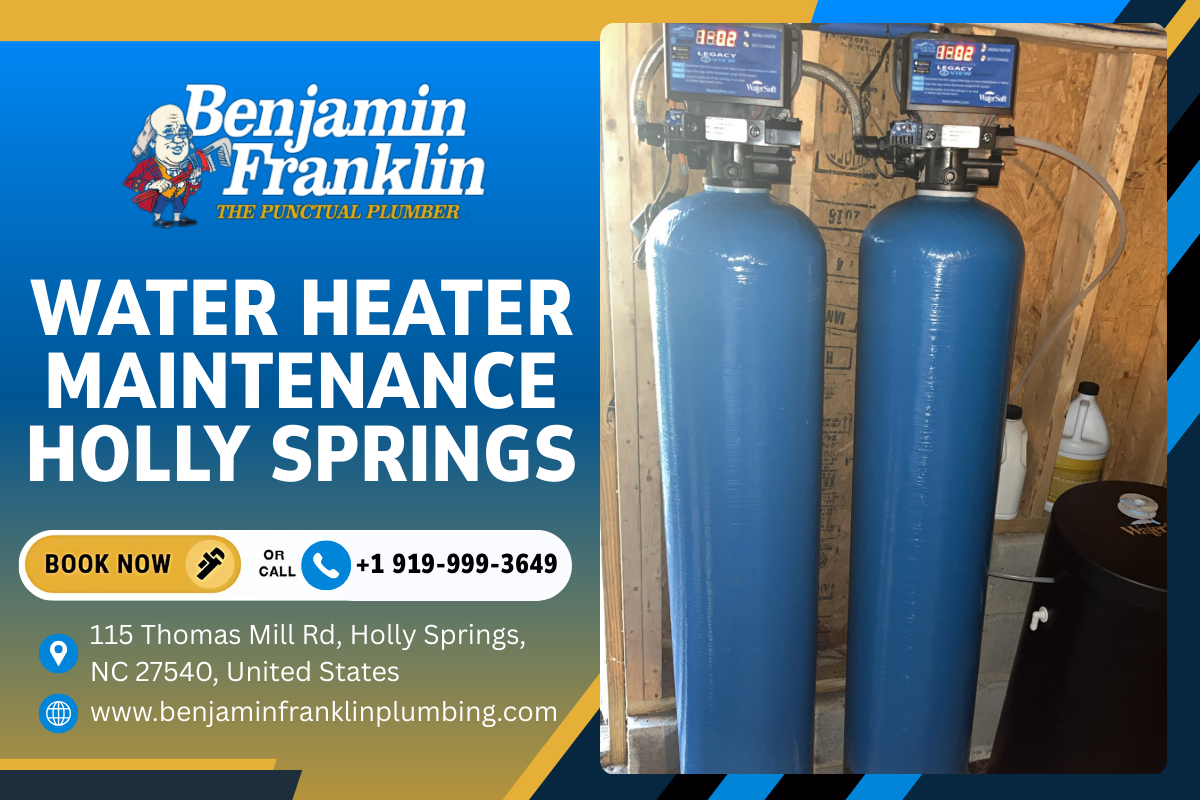
A tankless heater can last twenty years with proper care, but that estimate assumes water conditions are controlled. Without a softener or at least a scale inhibition filter, you’ll see heat exchangers losing efficiency within months. Scale doesn’t just lower output; it creates hot spots that stress solder joints and brazed seams.
I advise a simple test: pull and check the inlet filter every six months for the first year after a tankless installation. If it’s consistently loaded with fines, budget for prefiltration. If hardness measures above about 7 grains per gallon, consider conditioning. People sometimes balk at the cost, but they rarely regret it after their second yearly descaling bill and a few lukewarm showers when the unit starts throttling to protect itself.
Tankless water heater repair Holly Springs calls often trace to one of three culprits: clogged intake screens, venting issues, or gas supply undersized for peak demand. That last one shows up after kitchen remodels when a new range shares the same line. A service visit should include a gas load calculation and a look at regulator size, not just a parts swap.
When DIY helps and when it hurts
Homeowners ask what they can safely handle. A basic sediment drain on a tank, done quarterly, can stretch professional visit intervals. So can a visual check: look for weeping valves, rust trails, scorch marks, or pooled water in the pan. On tankless units, cleaning the inlet screen and keeping the closet free of dust and stored items makes a real difference.
Where DIY goes sideways is with T&P valves and gas fittings. I’ve replaced more than one relief valve that was overtightened, then sealed with thread compound meant for sprinklers. The valve wept from day one, but the real danger was a compromised seat that wouldn’t open under pressure. And every technician has a story about a flexible gas connector doubled over into a kink to make a water heater fit a tight corner. That shortcut can cause intermittent firing and carbon buildup no descaling will fix.
If you’re confident with tools, partner with a pro. Handle simple tasks between yearly water heater service visits, and let a technician document the big items. That record matters for warranty claims and resale. A tidy folder showing consistent water heater maintenance often reassures buyers more than brand names.
Replacement choices: tank versus tankless, and the middle ground
If you’ve decided on water heater replacement Holly Springs options break into three camps: standard tank, high-efficiency tank, and tankless. There’s no universal best choice; there’s a best fit for a home and a family.
Standard tanks win on upfront cost and tolerating imperfect water. They’re simple, parts are cheap, and they’ll ride out a bit of scale without drama. The trade-off is footprint and standby loss. In a garage or large utility room, that’s fine. In a tight interior closet, losing floor space to a 50- or 75-gallon tank cuts into storage.
High-efficiency tank models add better insulation and, for gas units, improved burner designs. They trim operating costs without changing how you use hot water. They still need annual flushing and periodic anode checks.
Tankless shines when space is tight and hot water demand is variable. Long showers, a big tub, teenagers cycling through baths — tankless units keep up if sized and installed correctly. But they’re less forgiving of poor maintenance and bad water. Budget for annual descaling and plan for professional tankless water heater repair at some point in the unit’s life. If you skip service, you shorten that life.
There’s a hybrid heat-pump tank option too. In our climate, heat-pump water heaters can cut energy use dramatically for electric homes. They make a gentle hum and need space for airflow. In a garage they do double duty dehumidifying. In a tight closet, they’re often a misfit. They also cool the room they’re in, which some people love in a garage and dislike in a utility closet next to a nursery.
Codes, permits, and the boring stuff that prevents expensive surprises
Holly Springs and Wake County follow codes that evolve. A water heater installation that passed ten years ago might not meet current requirements, especially around seismic strapping, drain pan sizing, and condensate disposal for high-efficiency units. Gas line sizing charts changed with appliance loads; vent pipe materials matter more now because high-efficiency exhaust is acidic. When you plan a holly springs water heater installation, pull the permit and do the inspection. It’s not red tape for its own sake. I’ve seen home sales delayed a week because an unpermitted replacement needed retroactive inspection and a vent correction. That’s a small headache compared to the risk of carbon monoxide backdraft or a panless tank leaking into a ceiling cavity.
What a good service call looks like from the homeowner’s side
A well-run visit starts with questions. How’s the hot water been? Any changes in utility bills? Any noises, smells, or leaks? Then you’ll see instruments come out: a manometer for gas pressure, a multimeter for elements and controls, a combustion analyzer on gas units, a pressure gauge for static and thermal expansion checks. The technician should show you findings without rushing. If the anode rod is toast, you should see the chewed metal and the new one going in. If the tankless descaling solution runs dark early and then clear, you should see the difference.
Expect clear notes and, if something’s borderline, a plan. “Your expansion tank is undersized for this PRV and water heater. It’s OK now, but replacement at the next visit makes sense.” That kind of comment frames decisions before you’re stuck on a weekend scrambling for a fix.
Seasonal timing and sensible service intervals
Holly Springs summers push AC systems; winters push water heaters. People notice hot water issues more in December when long hot showers feel less optional. If you schedule water heater service in late summer or early fall, you go into winter with a clean heat exchanger, a verified relief valve, and a tuned gas train or fresh elements. For tankless, that also means fewer nuisance lockouts during holiday gatherings when demand peaks. If you miss that window, don’t wait for a symptom. Maintenance isn’t an apology to your equipment; it’s the reason it behaves.
For most households:
- Tank-style: yearly service, faster cadence if on well water or if you hear gurgling and popping, which indicates sediment. Tankless: yearly service minimum, twice a year if hardness is high, the inlet screen shows frequent debris, or demand is heavy.
Those are guidelines, not commandments. A small household on softened water can push longer. A busy family on a well with visible iron staining should pull service forward.
The local advantage: why a Holly Springs pro makes a difference
There’s value in a technician who knows your neighborhood’s water main work schedule or the quirks of a specific builder’s mechanical closets. After a water main flush, the fine silt can clog filters and strainers across a block. A local tech hears about it early and can advise on whether to pull your inlet screens that week. With permits and inspections, someone who works regularly with Holly Springs inspectors knows what they’ll want to see before you schedule.
When it’s time for water heater repair Holly Springs residents benefit from someone who can triage over the phone: “Pilot out since the storm? Let’s check the gas meter reset.” When it’s time for water heater replacement, a pro who’s installed in your same floor plan knows whether a 75-gallon will fit without reworking framing, or if a recirculation loop will require a dedicated return or if a crossover valve will suffice.
Reading the signs before the cold shower
You don’t need to be a technician to spot early warning signs:
- Water that runs hot, then cold, then hot again points to scale in a tankless unit or failing thermostats in an electric tank. A rumble or kettle sound in a tank means sediment has built up. It’s the sound of water flashing to steam under a blanket of debris. Intermittent hot water with high gas bills can signal a lazy flame pattern on a tank or a miscalibrated gas valve on tankless. A dripping discharge from the relief line after every heat cycle hints at lost expansion tank charge, not necessarily a bad relief valve. Rusty water when you first open a hot tap suggests either the tank is corroding or galvanized nipples at the top are seeding rust.
If you catch these, you can schedule service instead of an emergency.
Budgeting and warranties without surprise
Most manufacturers want documentation of water heater maintenance for warranty claims, especially for tankless heat exchangers. Keep invoices and notes. For budgeting, plan a yearly line item that covers a service visit and one or two wear parts. For tanks, that might be an anode every few years. For tankless, filters and occasional sensors. Compare that annual spend to the cost of early replacement and you’ll see why tune-ups pay. Add a small contingency for unexpected findings, like a failing expansion tank or a flue repair.
If you’re installing new, confirm what the water heater installation includes: permit, pan and drain, expansion tank sizing, gas sizing, condensate neutralizer for high-efficiency gas, and a first-year service visit. Clarity up front prevents change orders later.
A practical path forward for Holly Springs homeowners
Start with a baseline service if it’s been more than a year. Ask for measurements, not just opinions: gas inlet pressure, CO levels on combustion, static water pressure, anode condition, and descaling status. Decide on an interval that fits your water and your household. If you’re on the fence between repair and replacement, weigh age, past issues, and real risk of leakage. When you choose replacement, pick equipment that fits your space and lifestyle instead of chasing a brochure number.
I’ve watched plenty of families in Holly Springs go from reactive repairs to a calm rhythm: schedule service, make small improvements, avoid drama. The hot water runs, the utility bills drift down, and nobody hears the 6 a.m. groan anymore. That’s what tune-ups buy — not just efficiency on paper, but quiet reliability you rarely think about, because you don’t have to.
Benjamin Franklin Plumbing
Address: 115 Thomas Mill Rd, Holly Springs, NC 27540, United States
Phone: (919) 999-3649